






CoachingPersonal

Life gets complicated before anyone gives you the manual.

There isn't one. 1:1 coaching to help you think it through, choose a next move that's genuinely yours, try it and adjust.

TeenagersYoung adultsYoung professionals

An open notebook with a page torn out and folded into a paper plane. On the left page, handwritten: What do I actually want? Notes beside it: No manual. Just a first draft. Try, adjust, go again.

Where you might be starting

Which question sounds more like yours?

The principles stay the same. The work changes with your situation.

Two cloth-bound books with a phone face down beside them. A sticky note on the top book asks: Whose plan is this?

“Whose plan is this?”

Teenagers & young adults · roughly 15–24

Taken seriously. Not treated as a problem to fix.

It's the first time so many big choices are yours: what to study, where, what to try first. Often there's a plan that looks sensible and one that feels like yours. Sometimes they're the same plan. We work out which parts are yours, test them in real life, and build something you can stand behind.

Often about direction and identity · university and study choices · motivation and putting things off · confidence · habits and attention · the phone · taking responsibility · big education and career choices

Abhi taught me what really matters in life, and what matters to me in particular.

Bianca M.
Translated from Italian · original

«Abhi mi ha insegnato cosa conta davvero nella vita, e cosa conta per me in particolare.»

Source: LEAD Educational Institute · Coaching for teenagers and young adults

Reading this as a parent? What you need to know

Let's talk
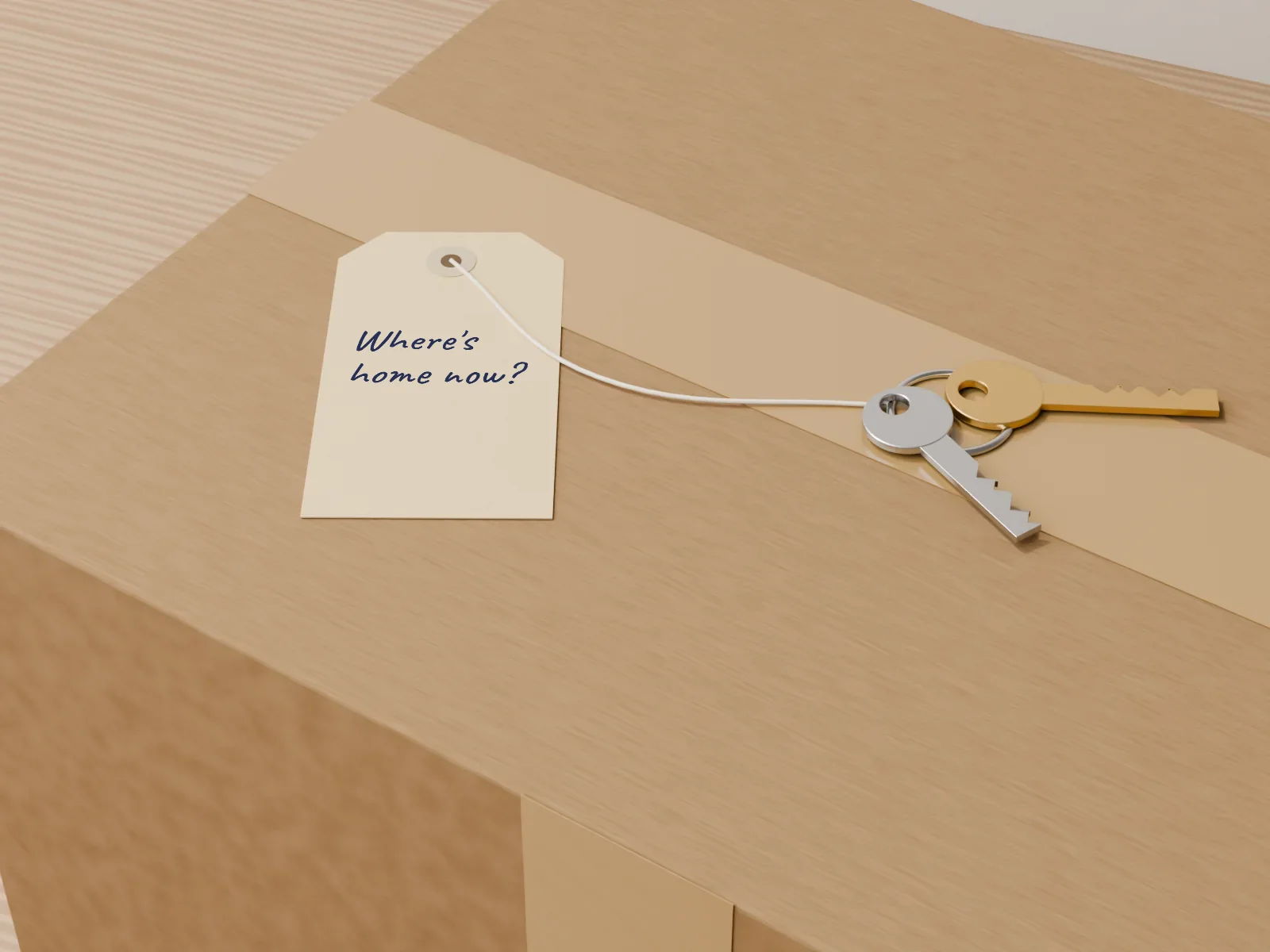

A taped moving box with a new set of keys on a ring and a manila tag that asks: Where's home now?

“Where's home now?”

Young professionals · roughly 25–35

For the first time, everything moves at once.

A new job, maybe a new city or country. Friendships shift, relationships get serious or end, and money, health and routine are suddenly yours to run. It can be the most exciting stretch of your life and the most disorienting. Each change is manageable. All of them together is the hard part.

Often about career and direction · moving country or city · relationships and friendships changing · living independently · health, money and habits · workplace dynamics · MBA, pivots and big decisions · loneliness and a new social life

Let's talk

Somewhere in between, or neither? That's fine. We start with what's actually going on.

What we actually work on

Most people arrive with a conclusion. We start by looking at it.

An illustrative example, not a client's story

1How it often starts

“I think I need to leave my job.”

2What we look at

Work Attention Health Money Independence Friendships
A map of six connected parts of life around "you": work, attention, health, money, independence and friendships. Here they are grouped three ways: the work; the place (friendships and independence); and the life around it (attention, health and money).

It starts with the work. It rarely stays there.

The work
the role? the manager? the hours?
The place
a new city, few friends yet
running a home alone
The life around it
rent, savings, a notice period
evenings spent recovering
sleep and energy

Pull one and the others move.

3The question that changes it

“What are you trying to change: the work, the place, or the life around it?”

4One useful step, before the big decision

  1. Name what isn't workingand where it actually sits.
  2. Check the real constraintsmoney, timing, the people involved.
  3. Choose one thing to trya conversation, a short experiment, a deadline.

Sometimes leaving is exactly the right call. The point isn't to talk you out of it. It's to decide with your eyes open.

Not someone to hand you the answer. Help seeing what you're actually deciding.

You decide. My job is to make sure you've really looked.

The same kind of looking works on whatever you bring

  • Direction
  • Decisions
  • Habits & accountability
  • Confidence & self-knowledge
  • Building a life

The method

P.A.C.E. turns a clearer question into something you do.

Four principles I've used for years. They don't make your decisions for you. They make sure insight turns into action, and that action gets an honest review.

Examples for
  1. P

    Purpose

    Know what you want, and why.

    Expectations, security and practical limits can matter deeply. We separate the priorities you'd choose on reflection from pressure you've never examined.

    15–24Weighing interest, security and family hopes openly, then choosing a course you can stand behind.

    25–35Deciding whether the next job is a step forward, or just the next thing on offer.

  2. A

    Accountability

    Honest follow-through.

    You take responsibility for what you said you'd do. Then we look at what happened, what got in the way and what changes next. A review, not a verdict.

    15–24You agreed to send three applications. We review what happened, what got in the way, and what you'll do next.

    25–35You planned to ask about moving teams. We look at how the conversation went, and what you'll try next.

  3. C

    Consistency

    Small habits hold.

    When enthusiasm fades, small habits keep your energy steady. The phone too: I don't count screen time, but if it takes hours you'd rather use differently, we look at what it's doing for you.

    15–24Twenty phone-free minutes before studying, every day, instead of one heroic detox.

    25–35A sleep and training routine that survives a deadline week.

  4. E

    Education

    Real skills, real projects.

    You learn by doing, not only by reflecting. Confidence follows evidence, so we make sure there is some.

    15–24One small, real project: built, finished and shown to someone.

    25–35Clear criteria for an offer abroad, before the deadline makes the choice for you.

Abhi goes above and beyond to help you change your mindset. And yet it doesn't even feel like work!

Alessandro C.
Translated from Italian · original

«Abhi va ben oltre per aiutarti a cambiare mentalità. Eppure non sembra nemmeno un lavoro!»

Source: LEAD Educational Institute · Coaching for teenagers and young adults
Explore P.A.C.E.

How it works

What working together involves.

Often we start with a 90-day horizon. Inside it, the rhythm stays the same: talk, try something, review, adjust.

1

Initial conversation

We talk about what's going on and whether coaching is the right tool. No commitment.

2

Define the real situation

Your goals, a map of where you are, and a first 90-day direction.

3

A 90-day direction

Regular 1:1 sessions, weekly at first, then every two weeks once things settle. Each one starts by reviewing what you tried and ends with what you'll try next.

Day 1Day 90 4Session 5Review & adjust

6ConsolidateLock in what works and keep going on your own.

Steady the base Build momentum Consolidate & decide

Each loop is a session, something you try, an honest review and an adjustment. The emphasis shifts with you; it isn't a timetable. Some decisions come early, some need time.

  • Mostly onlineIn person in Siena where it's useful
  • Italian or EnglishWhichever you prefer
  • Usually 2–3 monthsFor a specific goal; 4–6 for deeper work
  • Under 18?A note for parents

Why me

I'm not speaking to you from a textbook, or from above.

I haven't lived your life, and I won't pretend to. But I know what it's like when a decision has real consequences. So I bring practical experience, honest questions and full attention to yours.

More about me

Decisions I've had to make myself

  • Moving countries, and rebuilding work and life in a new one.
  • Engineering first, then an MBA at IIM Ahmedabad.
  • Building a company from zero: LEAD, in Siena.
  • Many years of working with young people, one conversation at a time.

Client story

What changed, in his words.

See more stories

I met Abhi when I was 20. At the time I was a young student struggling to reach my goals. Little by little, Abhi transformed my life by guiding me through every part of my daily routine: from training to nutrition, from studying to making better use of my free time. In short, I came to him with a disenchanted view of life and left full of energy, always eager to do more and improve.

Giulio B.Started at 20 Habits · Energy · Outlook
Translated from Italian · original

«Ho conosciuto Abhi quando avevo 20 anni. All'epoca ero un giovane studente che faticava a raggiungere i propri obiettivi. Poco a poco, Abhi ha trasformato la mia vita guidandomi in ogni aspetto della mia routine quotidiana: dall'allenamento all'alimentazione, dallo studio a un uso migliore del mio tempo libero. In poche parole, sono arrivato da lui con una visione disincantata della vita e ne sono uscito pieno di energia, sempre entusiasta di fare di più e migliorare.»

Source: LEAD Educational Institute · Coaching for young professionals

See more stories

Good to know

Before you get in touch.

Do I need to know what I want before we start?

No. Working that out is often the first piece of work. Bring the part that feels stuck, or the thing you want to build. We start there.

Is coaching only for when something's wrong?

No. Plenty of people come with something they want to make happen: a move, an application, a change of direction. The work is the same: get clear, try something, review it honestly.

What does it cost?

It depends on how many hours we work together and how often we meet. You'll get a clear figure after the first conversation, before you commit to anything.

The same notebook at night under a desk lamp. The question on the page stops halfway: What do I actually… A note points to it: Bring this part.

You don't need to have everything figured out before we talk.

Bring a decision you're weighing, something you want to build, or the part that won't quite move.

Let's talk