





AI for your organisation

AI isn’t the problem. Your process is.

Most processes were built for people, who fill the gaps from memory. AI can’t. I rebuild how the work flows so AI can carry the repetitive parts, then train your team to run it. Same team. Far more done.

Computer-science engineer MBA, IIM Ahmedabad Founder of LEAD

Close-up of a dark pinboard: coloured threads from many pins knot themselves around a single brass pin.
Eight threads, one for each department and its own format, tangle around the one pin where everything has to be stitched together. This is where the hours go.

People I’ve trained and coached work at

  • GSK
  • UniCredit
  • Philogen
  • FIAIP
  • Edenred
  • Eurofins

Why AI disappoints

You’ve heard this in a meeting. Maybe you’ve said it.

The monthly report

“AI just doesn’t work for us.”

Eight departments send their monthly figures, each in its own format: a spreadsheet, a PDF, an email with a table pasted in. One team spends days stitching them together. Someone hands the pile to AI. It makes a mess of it.

The real problem: Eight formats. No rules.

The two exports

“It doesn’t even get the basics.”

Two systems, two exports. One column says Cod. Cliente, the other says Account ID. Laura in finance has always known they’re the same customer. Nobody ever told the AI. It can’t match a single row.

The real problem: Nobody told it what Laura knows.

What the AI sees

Cod. Cliente Account ID

Same customer. Two systems. One rule nobody wrote down.

AI didn’t fail. Nobody told it how your work works.

Processes grow around people, and people carry the rules in their heads: which file is current, which name means what, who needs it next. AI can’t read minds.

So I start with the process. Write that knowledge into how the work flows, and the same tools start delivering.

What 30% is worth

A team of 20. The output of 26.

20 people × €50,000
€1,000,000 a year
30% more productive
€300,000 a year, from the same team

That’s what I see again and again in my training programmes, often within a couple of weeks. Not from longer hours. From AI taking over the repetitive work, so people spend their time where their expertise counts.

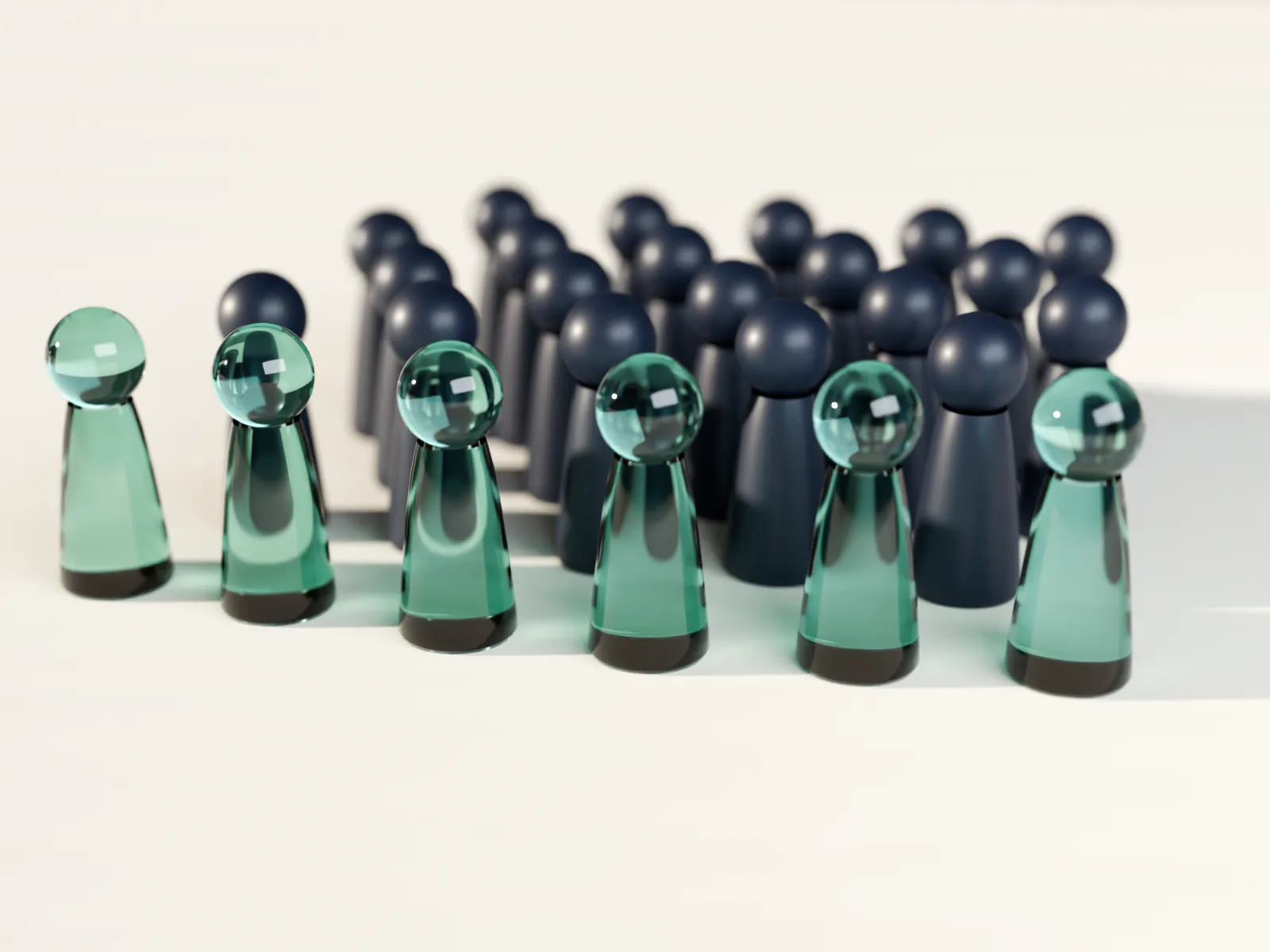
Twenty dark wooden figures stand in rows; six teal glass figures stand in front of them.

Two ways to work together

Start with your team. Or rebuild the process.

Not sure which you need? Most people aren’t. Tell me how the work runs today and I’ll suggest the smaller step first.

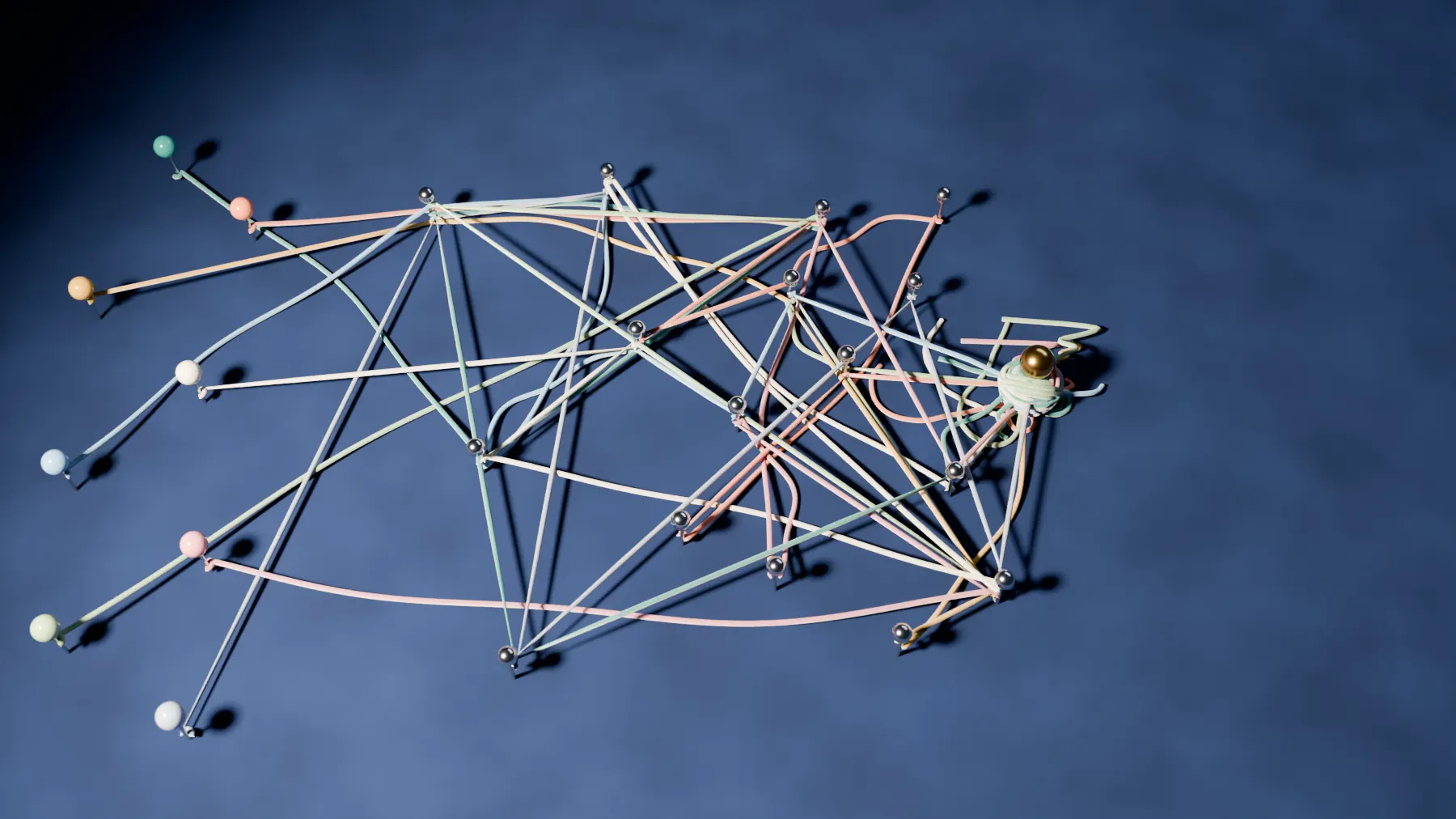
The same pinboard after a few changes: three threads now run straight and parallel, the rest are still tangled.

01 Team training

Train your team on the work they already do.

I start by learning how your team works. Then I make a few small changes so AI fits the process, and train your people on their real tasks: the reports, emails, analyses and documents they handle every week.

No generic prompt course. Results show up in weeks, not quarters.

  • For a whole team or department
  • Built on your real tasks and tools
  • Quoted for your team
Talk about team training

02 Process redesign

Rebuild one process around AI. Then learn to run it.

When the work depends on what’s in people’s heads, training alone won’t fix it. We take one shared process, map how it really runs and rebuild it so AI carries the repetitive parts.

I do the architect’s work: which steps stay with people, which AI assists, which run on their own. Then I teach each person the part they’ll run.

Time
15 hours
Group
2 to 6 people who share one process
Investment
€2,995 per programme

Bigger, multi-team redesigns are scoped with you.

Talk about a process
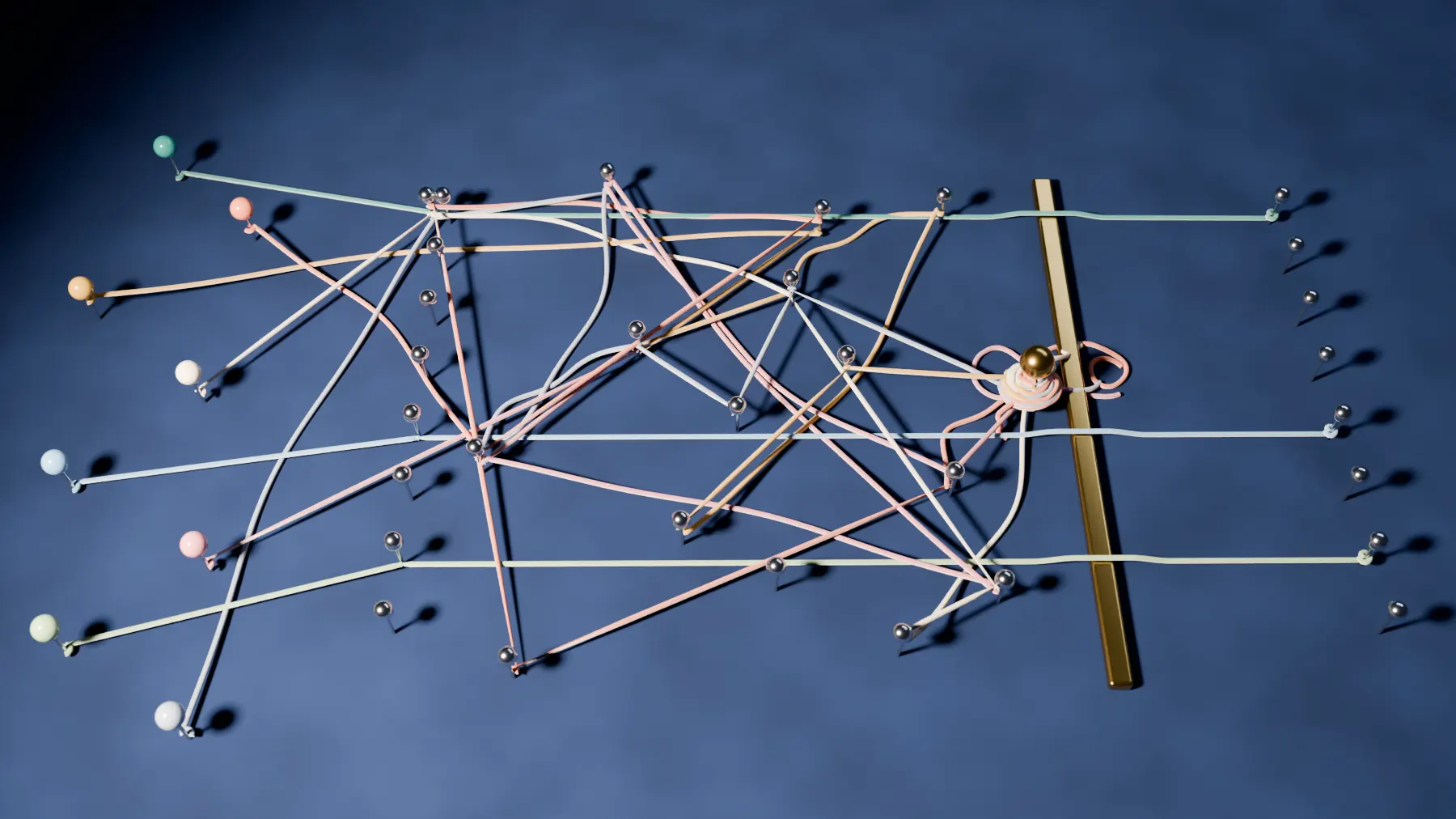
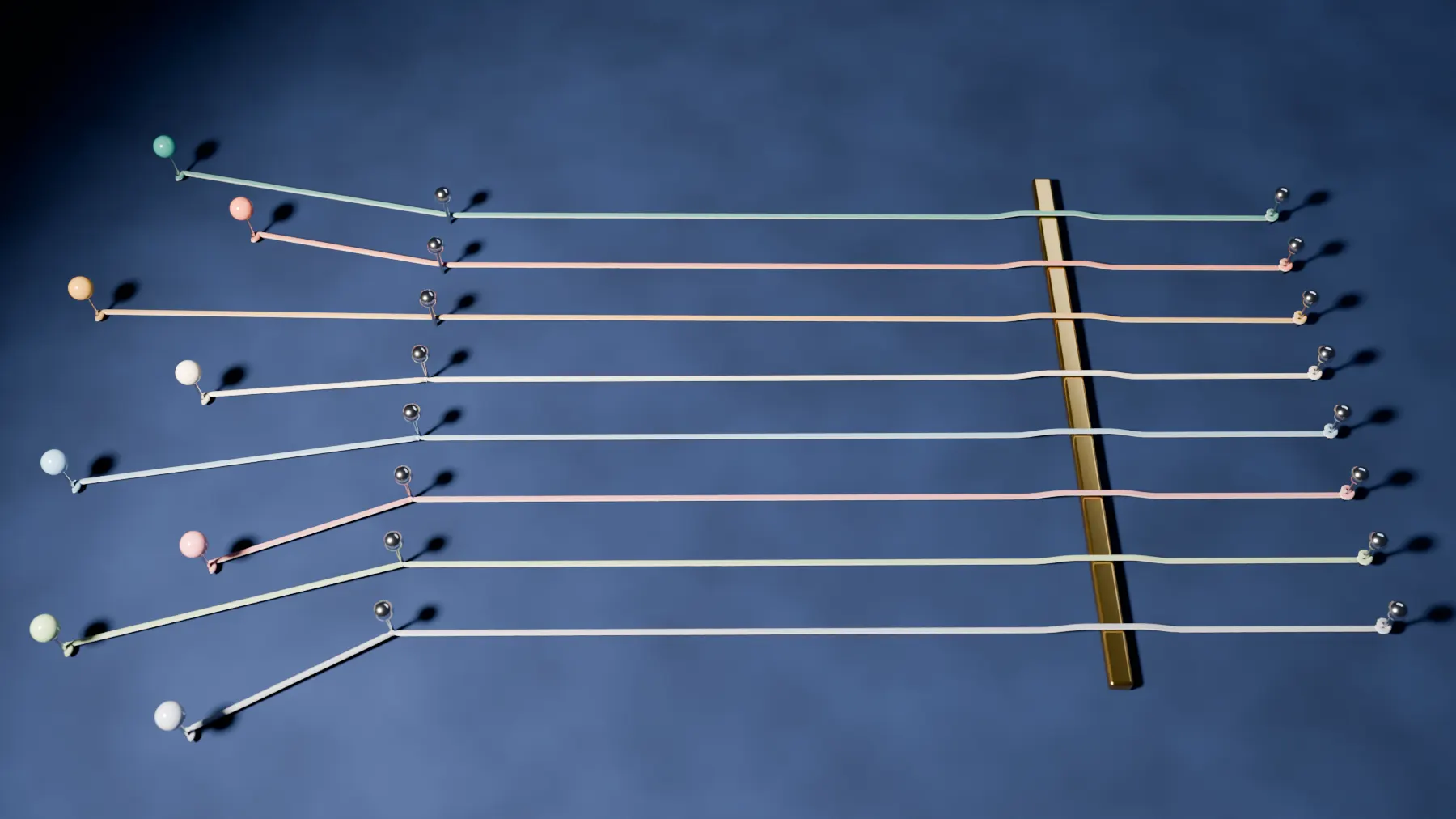
Before: the pinboard tangled, every thread wandering through stray pins into one knot.
After: every thread enters one intake column and runs parallel over a brass bridge.
Same threads, same pins. Drag to compare.

In practice

A department built from scratch. Without drowning in admin.

In one organisation, a new department was being formed: a new org chart, new meetings and minutes, new processes, new people to onboard, training to arrange.

We started with the AI tools they already had and how they were connected. I taught the team those tools. Then we mapped the work, put it into one clear structure and automated the manual, repetitive steps.

It made the job of building that department immensely easier.

The architect’s drawing New department · coordination

  • People decide
  • AI drafts, a person checks
  • Runs on its own
  1. 01 Trigger

    • A meeting is held
    • A new person joins
    • A process changes
  2. 02 Capture

    • Minutes drafted from the meeting notes
    • Onboarding pack assembled for the role
    • Change summarised for everyone affected
  3. 03 One structure

    • One tracker: decisions, owners, deadlines, people, training
  4. 04 Put to work

    • Follow-ups sent to each owner, on time
    • Training scheduled for new people
    • Weekly status ready for the lead
  5. 05 Decide

    • The lead decides priorities, exceptions and sign-off

Then each person learns the level their part needs: Operator for the daily AI-assisted steps, Builder for the automations, Starter for newcomers. The Architect part is mine.

Client details withheld. Drawing simplified for illustration.

Your tools, your rules

Your IT approved Copilot. Let’s make it earn its licence.

In my own business I use every kind of AI. A bank, an insurer or a pharma company can’t, and shouldn’t. So I work inside your security rules, with the tools you already have.

Copilot is a good example. Give it a clear task, the right context and a tight scope, and it delivers. Knowing exactly what it can do is half the job.

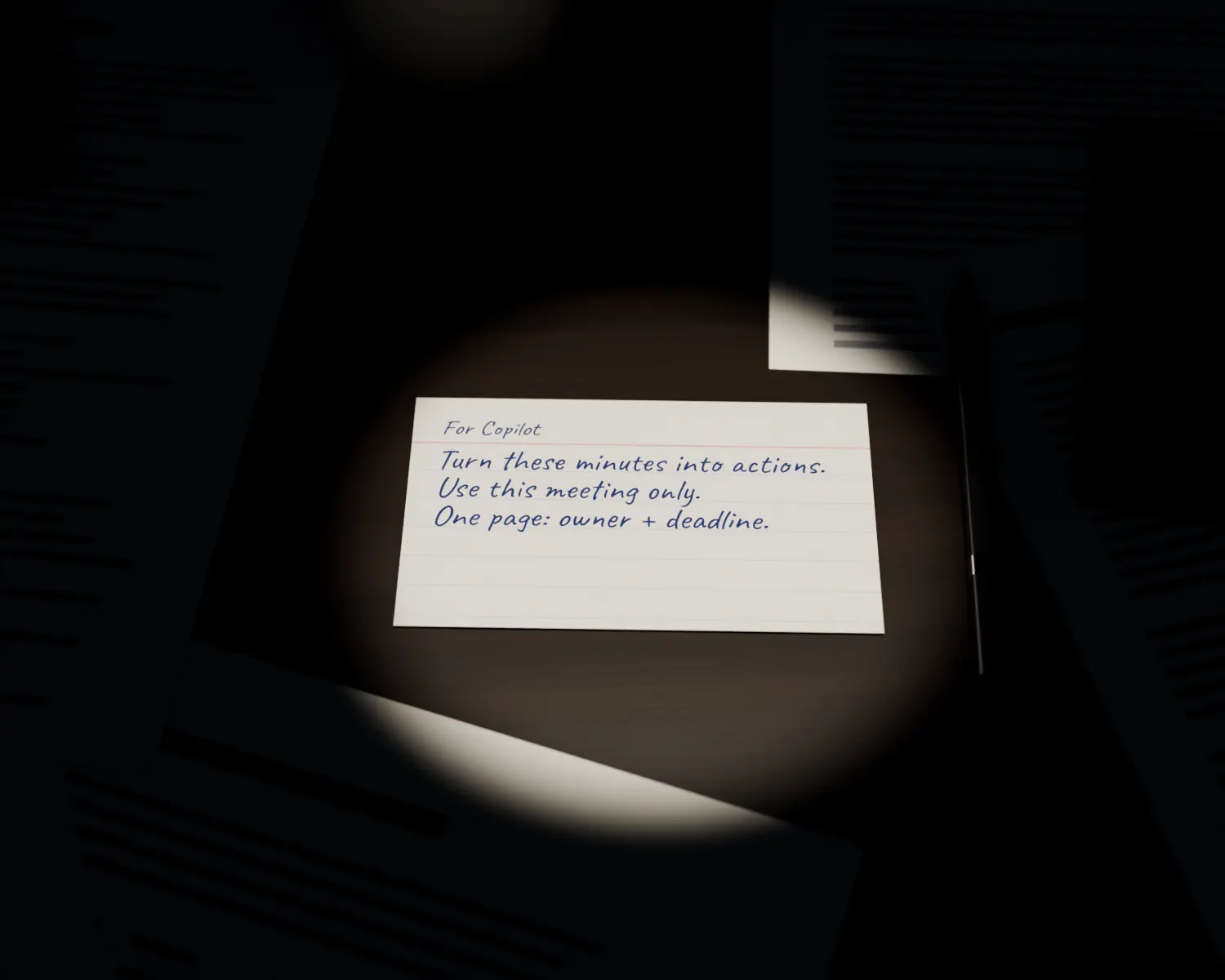
A dark desk scattered with papers, a laptop and a phone. One narrow beam of light falls on an index card with a short handwritten instruction for Copilot.
The card reads: For Copilot. Turn these minutes into actions. Use this meeting only. One page: owner and deadline.

…I used the ideas we discussed to implement end-to-end AI-powered processes that are giving clear returns.

Katherine J. AI & leadership · DeloittePublished on LEAD
Low view along the re-strung threads: eight colours run parallel over a glowing brass bridge.

Which process is costing your team the most time?

Bring one. In a free 30-minute call we’ll look at how it runs today, and whether training or a redesign makes more sense.

Talk about your team